
William Tell (P. G. Wodehouse Edition)
Overview
William Tell Told Again is P. G. Wodehouse’s comic retelling of the Swiss legend of William Tell. First published in London by Adam & Charles Black on 11 November 1904, it is an illustrated narrative combining prose and verse rather than one of the later comic novels for which Wodehouse became best known. Wodehouse wrote the principal prose narrative. John W. Houghton supplied the prologue, epilogue, and verses accompanying the illustrations, while Philip Dadd created the frontispiece and fifteen full-page colour illustrations. The book was dedicated to Biddy O’Sullivan as a Christmas present. Its design and authorship make it a collaborative picture book as well as a literary retelling.
Story and style
The story draws on the familiar legend of Switzerland under Austrian rule. The Austrian emperor appoints Hermann Gessler as governor, and Gessler’s oppressive conduct, including his demands for taxes, angers the Swiss. William Tell, a skilled archer, defies the governor and is punished. In the best-known episode, he must shoot an apple from his son’s head. Tell succeeds, but the ordeal deepens his conflict with Gessler. In the traditional course of the legend, Tell later escapes and kills the governor, and resistance to Austrian authority grows beyond the fate of one man. Wodehouse’s title signals a retelling: the book revisits a well-known story in a fresh narrative voice rather than presenting itself as a historical account.
The book’s characteristic effect comes from bringing a serious heroic legend into contact with an unsolemn, nimble style. Wordplay and satirical dialogue lend lightness to scenes of coercion and danger, while the verse passages and colour illustrations interrupt and vary the prose narrative. The apple-shot episode gives the story a vivid centre: it tests Tell’s skill and courage while placing his son in immediate peril. The humour does not erase the underlying conflict between arbitrary power and resistance. Instead, it gives the retelling a buoyant tone and a distinctive rhythm, allowing patriotic feeling and comic observation to coexist.
Background and standing
Published while Wodehouse was still early in his career, the book shows him working outside the setting and formats most associated with his mature reputation. His later comedy is particularly identified with characters such as Jeeves and Bertie Wooster and with the world of pre-war English upper-class society; here, he turns instead to a medieval Swiss legend and to a book shaped jointly by prose, verse, and illustration. That contrast makes the work useful for understanding the range of his early writing and his interest in comic language beyond contemporary social farce. Its lasting place is that of a distinctive early adaptation of the Tell legend and an example of Wodehouse’s early experimentation with illustrated storytelling. It is not the work on which his broadest reputation rests, but it offers readers a chance to see a familiar tale recast through his light, satirical manner.
About the Author
Origins and education
Sir Pelham Grenville Wodehouse, usually known as P. G. Wodehouse, was born in Guildford, Surrey, England, on 15 October 1881. His father was a British magistrate based in Hong Kong, and Wodehouse was the third son in the family. He spent his school years at Dulwich College in London, to which he remained devoted throughout his life. After leaving school, he worked at a bank, a job he disliked, and began writing in his spare time. His English upbringing and education helped shape the social world that became a frequent setting for his fiction, even though much of his adult life was spent in France and the United States.
Career and principal works
Wodehouse began his professional writing career in the early twentieth century. In 1902 he became a humorous columnist for the London Globe and also contributed freelance work to other publications. His career continued for more than seventy years and encompassed novels, short stories, plays, lyrics, and work for film and musical theatre. An early example of his versatility is William Tell Told Again (1904), a prose-and-verse retelling of the Swiss legend, published with colour illustrations.
Wodehouse is best known for his comic characters and recurring fictional worlds. The stories of Bertie Wooster and his exceptionally capable valet Jeeves became among his most celebrated creations. Jeeves first appeared in the 1915 story “Extricating Young Gussie”; the collection My Man Jeeves followed in 1919. Later milestones in the series include The Inimitable Jeeves (1923) and The Code of the Woosters (1938). Another major body of work centres on Blandings Castle and its owner, Lord Emsworth; Something Fresh (1915) began the Blandings series. Leave It to Psmith (1923) is a notable comic novel featuring the resourceful Psmith. Wodehouse also wrote about the Oldest Member and his golf stories, and created Mr. Mulliner, whose tall tales range across an assortment of comic subjects.
His work was not confined to fiction. He wrote lyrics and collaborated with composers and theatrical writers on musical comedies and plays. His output included more than thirty plays and musical comedies and over twenty film scripts, alongside more than ninety books. Across these forms, his work is recognised for verbal ingenuity, carefully managed comic timing, elaborate misunderstandings, and a light narrative manner. His recurring characters and settings gave him room to vary familiar comic patterns over a long career.
Later life and reputation
Wodehouse became a United States citizen in 1955, having been born in Britain and spent much of his life abroad. He died in Southampton, New York, on 14 February 1975, aged ninety-three. He is widely regarded as one of the most successful English-language humorists of the twentieth century and as a master of English prose. Admirers have included contemporaries such as Evelyn Waugh and Rudyard Kipling, as well as later writers including Douglas Adams, Salman Rushdie, and Terry Pratchett. The Irish writer Sean O’Casey famously described him as “English literature’s performing flea,” a phrase that captures the nimble energy of his comic writing. His books remain widely read, and Jeeves and Wooster, Blandings Castle, and his other comic creations continue to define his lasting literary reputation.
StoryFlow
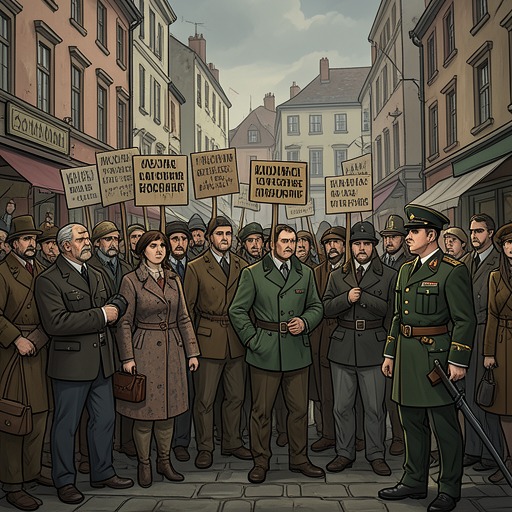
The Tax Revolt
This thread traces how oppressive taxation turns private discontent into an organized revolt and, ultimately, independence.
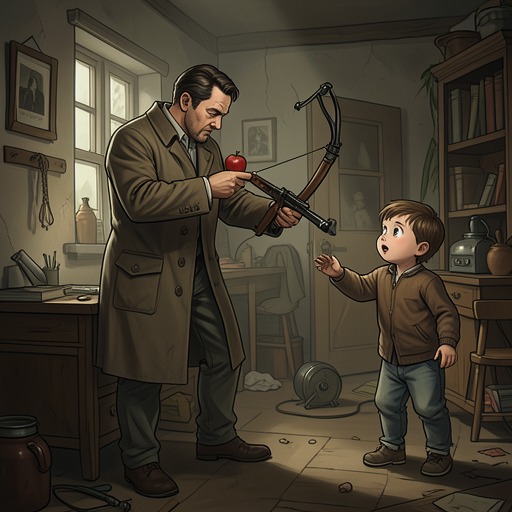
The Apple and the Bow
This thread follows William Tell’s skill with the crossbow from a celebrated talent to a test of paternal love and political defiance.
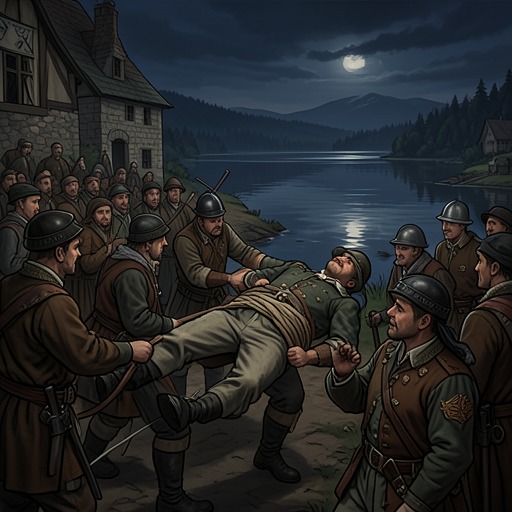
From Capture to Counterattack
This thread traces William Tell’s passage from public arrest through the storm at sea to his decisive escape and revenge.
